
Solvent Coating and EtO: Where Medical Device Static Control Stops Being Routine
Most medical device manufacturing is not a hazardous operation. Assembly, inspection, kitting, and packaging of finished devices happen in clean, controlled, entirely non-flammable environments, and the static control that goes with them is straightforward.
But a specific subset of medical device processes creates something different: a classified hazardous location, where the atmosphere itself can ignite. If your operation includes one of these processes, static control stops being routine and becomes a safety question. This article is about that one case, not about medical device manufacturing as a whole.
Which processes create the hazard
The hazardous-location subset is narrow and predictable. It shows up where a process introduces enough flammable vapor, gas, or combustible dust to classify the area:
- Solvent-based device coating: Drug-eluting stents, hydrophilic guidewires and catheters, and antimicrobial-coated components are coated with highly volatile solvents such as acetone, isopropyl alcohol, methanol, ethanol, toluene, THF, and MEK. Spray and dip coating release flammable vapor by design.
- Vapor degreasing and bulk solvent cleaning: Concentrated, high-volume solvent cleaning lines put meaningful flammable vapor into the work area, unlike routine small-quantity IPA wiping, which typically does not classify a space.
- Ethylene oxide sterilization areas: EtO is a common sterilant for heat-sensitive devices and is flammable and explosive across a wide concentration range.
- Combustible powder handling: Dry powder inhalers and similar products introduce combustible dust, a distinct but related ignition risk.
Outside of these, most device cleanrooms carry no such classification at all. The point isn’t that medical device manufacturing is dangerous. It’s that if you run one of these processes, the rules for static control are not the same as they are on your assembly or packaging lines.
Why static becomes the critical variable
Where a classified atmosphere exists, static stops being only a quality concern and becomes a potential ignition source.
That’s a real bind, because these same processes tend to generate significant static charge. Films and webs, plastic tubing and catheter bodies, and coated components all build and hold charge as they move and separate. That charge is already a quality problem: it pulls particles onto sterile surfaces, causes misfeeds, and can discharge into sensitive electronics. So you still need static elimination.
The complication is that a conventional ionizing bar can itself become the ignition source that sets off the surrounding vapor. In a classified zone you face two requirements at once: neutralize the static, and introduce no ignition source. Standard static control cannot satisfy both.
Static control engineered for the classified zone
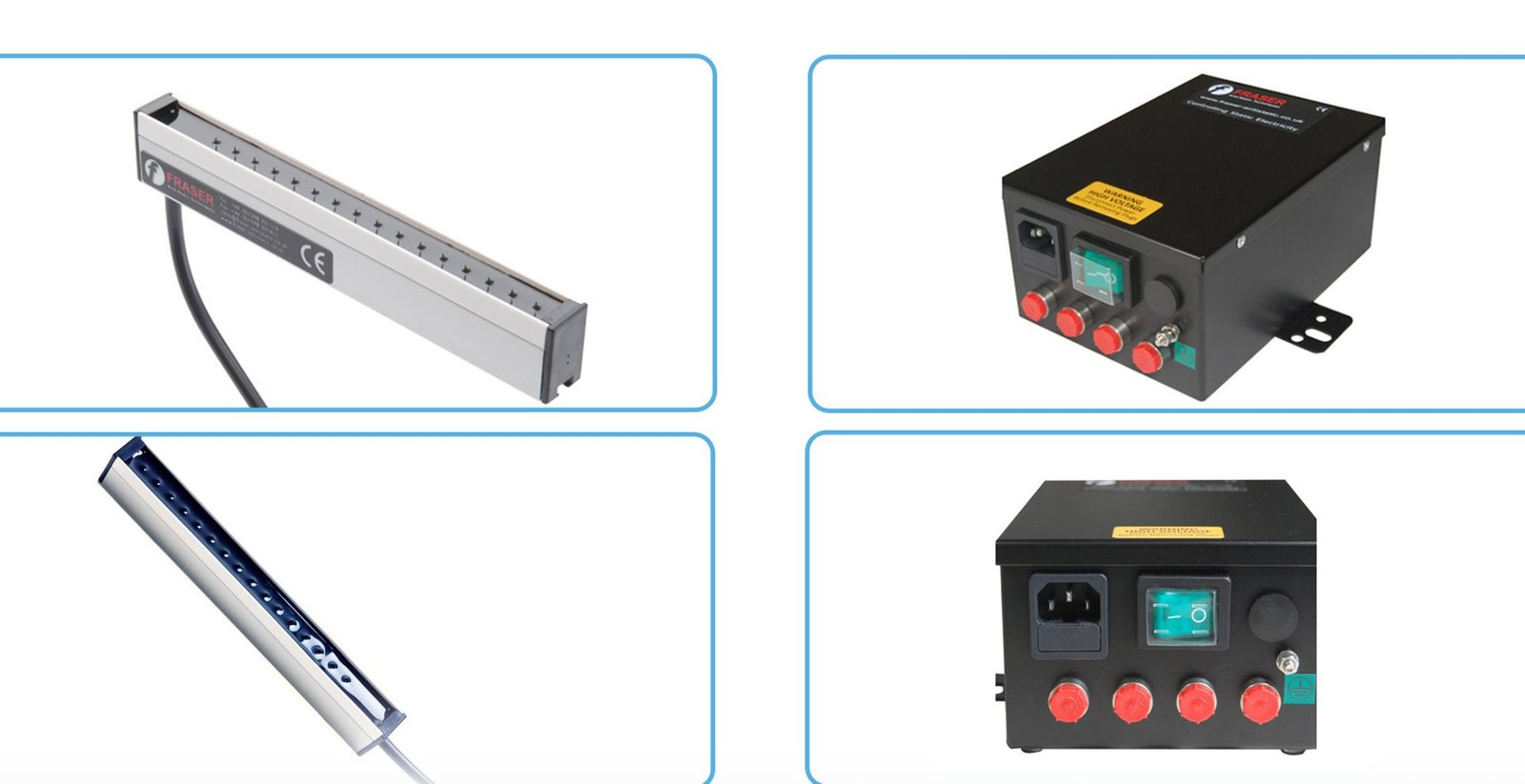
The resolution is static control certified specifically for explosive atmospheres, which is the role of the EX1250 static bar paired with the EXHP power unit.
The EX1250 is an ATEX-certified static eliminator built for hazardous and explosive environments. It runs shockless and current-limited, keeping its output below ignition energy levels while still delivering the high, consistent ion output that fast-moving, high-charge materials require. Its electronics are fully encapsulated against vapor, moisture, and wear, its stay-sharp etched emitters are rated beyond five years of service, and its washable construction stands up to the sanitation protocols medical and pharmaceutical production demand.
The EXHP power unit makes the arrangement safe by design. It sits outside the hazardous zone and powers the bars within it, generating controlled high voltage at low, current-limited output that stays below ignition energy. A single unit drives up to four EX-series bars, shuts down automatically on short circuit or overload, and supports combined bar and cable runs up to 30 meters, so the power source stays safely clear of the classified area while protecting the process inside it. Optional remote monitoring surfaces faults before they cause downtime.
Together they neutralize static for product quality while providing certified protection against becoming an ignition source.
Design the zone before you build the room
When a process does fall into this subset, the costly mistake is treating hazardous-area static control as an afterthought — discovering only after the cleanroom is built that a coating or sterilization step created a classified zone. By then the classification, airflow, equipment placement, and power routing are fixed, and retrofitting certified equipment into them is slow and expensive.
At MediClean, we design and build medical device cleanrooms. When your process warrants it, we design the cleanroom and its static and contamination control as one system: identifying up front which specific areas create classified atmospheres, specifying ATEX-rated static control like the EX1250 and EXHP only where the hazard requires it, and routing power and monitoring so the space is compliant and productive from day one.
If your process includes solvent coating, vapor degreasing, EtO sterilization, or combustible powder handling, let’s map those zones before your next New England cleanroom is built.