
Laminar Flow Hoods
What Is a Laminar Flow Hood?
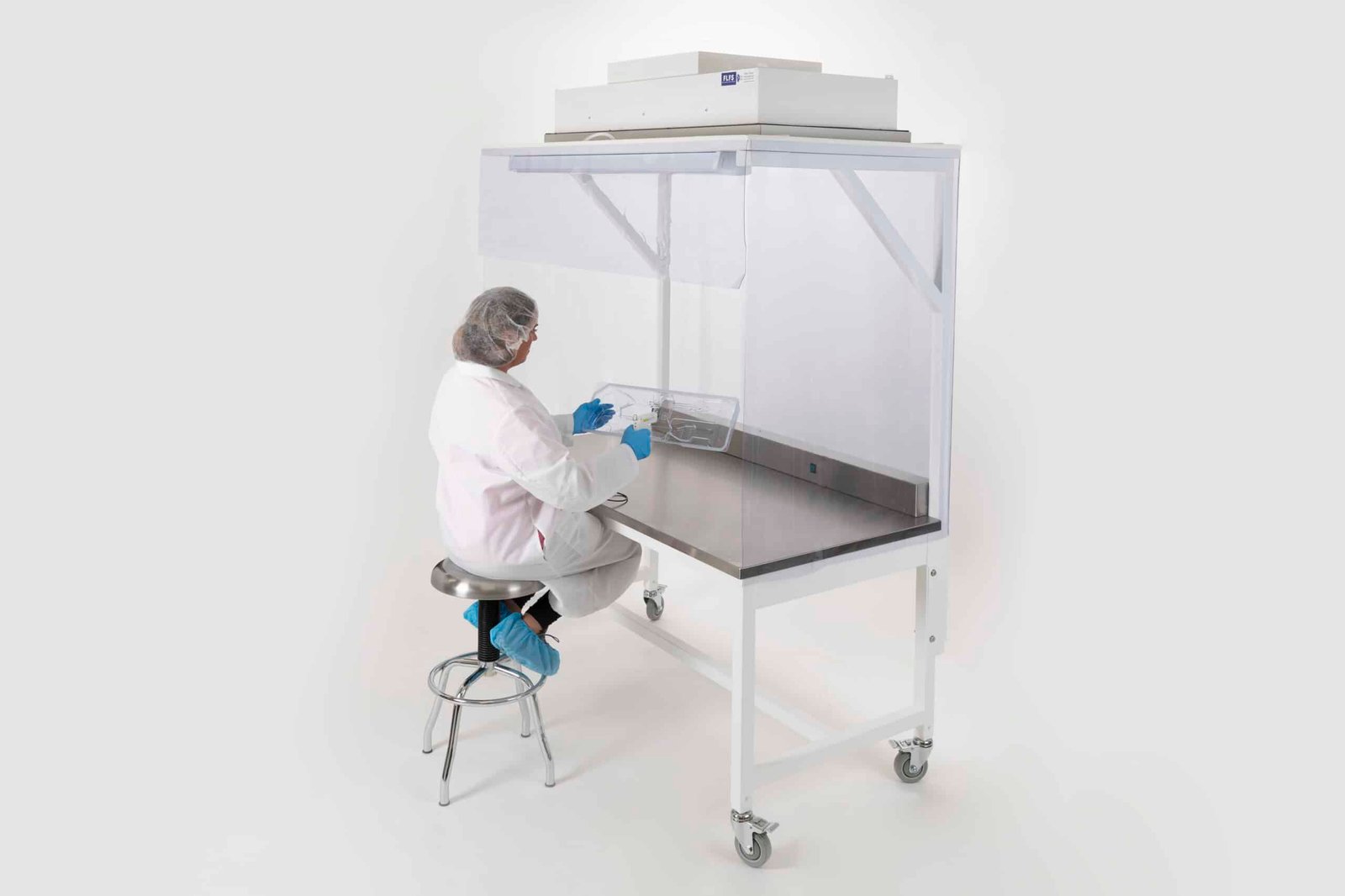
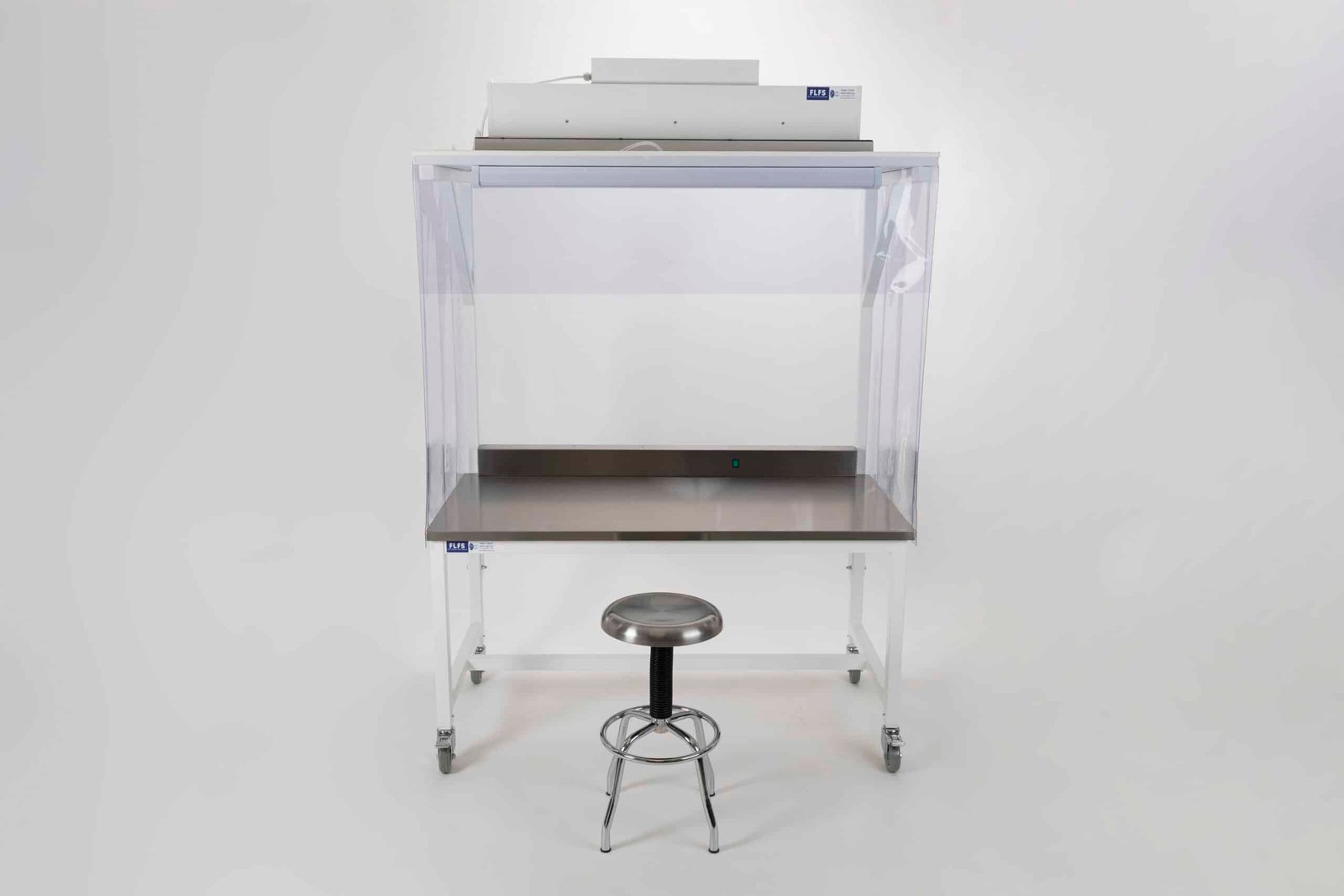
A laminar flow hood—also called a laminar flow bench or laminar flow workstation—is an enclosed workspace that uses HEPA (High Efficiency Particulate Air) filtration to produce a continuous, unidirectional stream of clean, particle-free air across the work surface. This controlled airflow protects sensitive medical devices, components, and assemblies from airborne contamination during handling, assembly, and packaging operations. Laminar flow hoods are a critical component of contamination control strategies in ISO-classified medical device manufacturing environments.
Vertical vs. Horizontal Laminar Flow Hoods
Laminar flow hoods are available in two primary airflow configurations, each suited to different applications:
Vertical Laminar Flow Hoods
In a vertical laminar flow workstation, HEPA-filtered air flows downward from a filter mounted in the ceiling of the unit, across the work surface, and out through the front or sides of the enclosure. Vertical flow hoods are ideal for work involving tall components or equipment where horizontal airflow could cause turbulence or product exposure.
Horizontal Laminar Flow Hoods
Horizontal laminar flow hoods direct HEPA-filtered air from the rear of the unit horizontally across the work surface toward the operator. They are well-suited for applications that require maximum product protection and where operator exposure to the work material is not a concern.
Key Features and Benefits
- HEPA filtration achieving 99.99% efficiency at 0.3 microns
- Unidirectional airflow for consistent particle control at the work surface
- Stainless steel work surfaces for easy cleaning and disinfection
- Available in multiple sizes to fit standard cleanroom workstation configurations
- ISO 14644-compliant for use in ISO Class 5 and cleaner environments
- Low-noise operation suitable for precision assembly tasks
Laminar Flow Hoods in Cleanroom Environments
MediClean’s laminar flow hoods are designed to integrate seamlessly into modular cleanroom environments. Whether used as standalone workstations or as part of a larger cleanroom layout, our laminar flow solutions support consistent contamination control for medical device assembly, inspection, and packaging. MediClean’s technical team helps you select the right configuration—airflow direction, filtration rating, size, and features—to match your process requirements and cleanroom classification.
Frequently Asked Questions (FAQ)
Common questions about Laminar Flow Hoods from medical device manufacturers.
Q: What ISO classification does a laminar flow hood provide?
A: A properly designed and maintained laminar flow hood creates an ISO Class 5 (Class 100) environment at the work surface, making it suitable for the most sensitive medical device assembly and handling operations.
Q: What is the difference between a laminar flow hood and a biosafety cabinet?
A: A laminar flow hood is designed to protect the product from contamination. A biosafety cabinet is designed to protect both the product and the operator from biological hazards. For medical device applications where operator safety from hazardous materials is required, a biosafety cabinet is appropriate. MediClean can help you determine and provide the right equipment for your specific process.
Q: How often does the HEPA filter in a laminar flow hood need to be replaced?
A: HEPA filter life depends on the environment and usage. In a well-maintained cleanroom, HEPA filters typically last at least 3–5 years. MediClean recommends annual certification testing and filter performance monitoring to ensure your laminar flow hood maintains its specified ISO classification.
Q: Can laminar flow hoods be installed inside an existing cleanroom?
A: Yes. MediClean laminar flow hoods are designed for seamless integration into existing modular cleanroom environments, including hard wall, rigid wall, and soft wall cleanroom configurations.